Every facility works differently
Each facility has its own forms, its own summary format and its own rules. There is no shared clinical language, and no way to compare facilities.
Start with one facility. ClinicAI connects therapists, nursing staff and administration in one clinical system, with AI that transcribes and summarizes, and encryption of every identifying detail. See it working before you decide on the whole network.
One facility, full support, no commitment for the whole network
One center you can keep in your head. Therapists, psychiatrists, nurses, counselors, groups. How do you manage all of it?
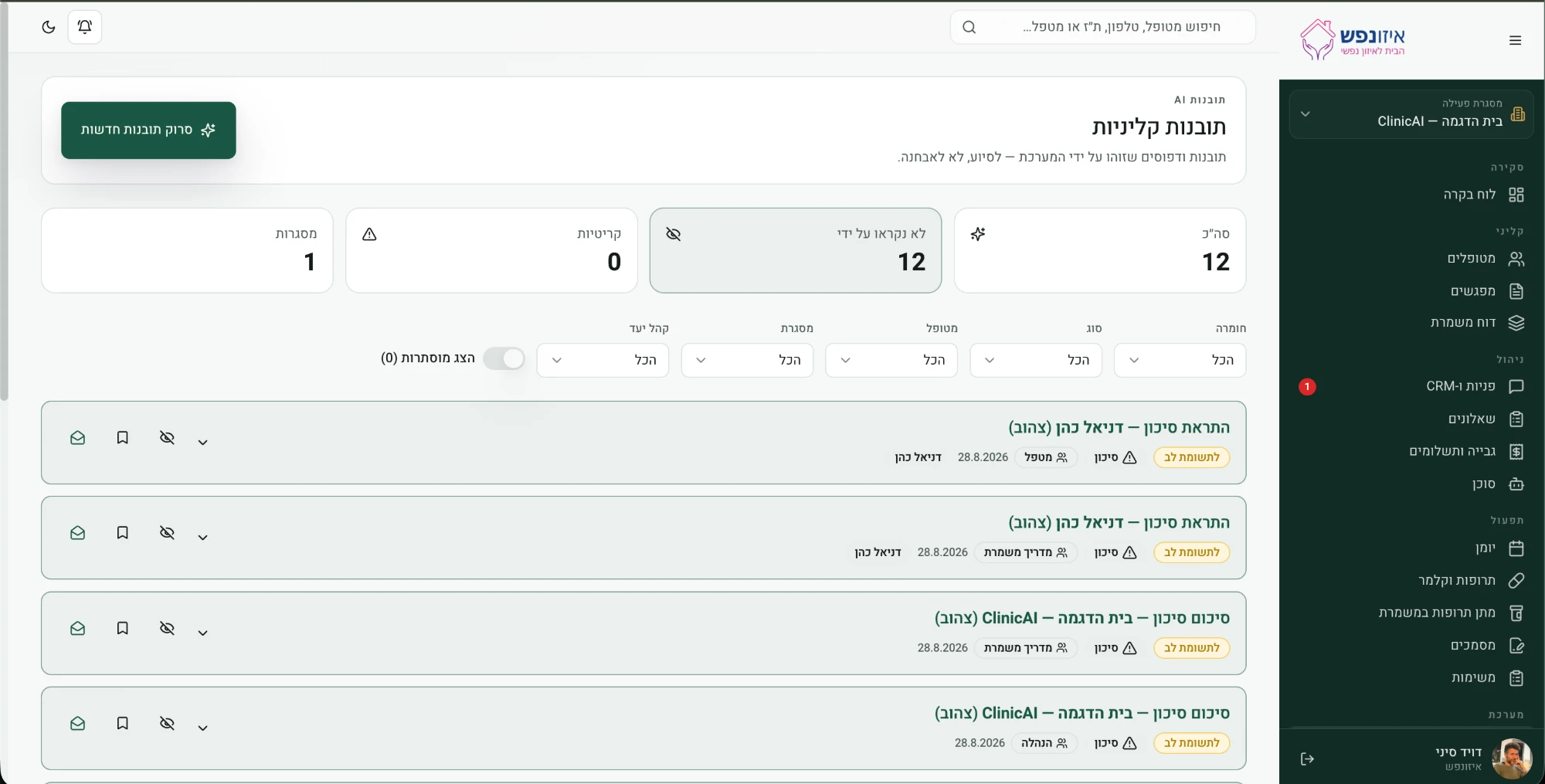
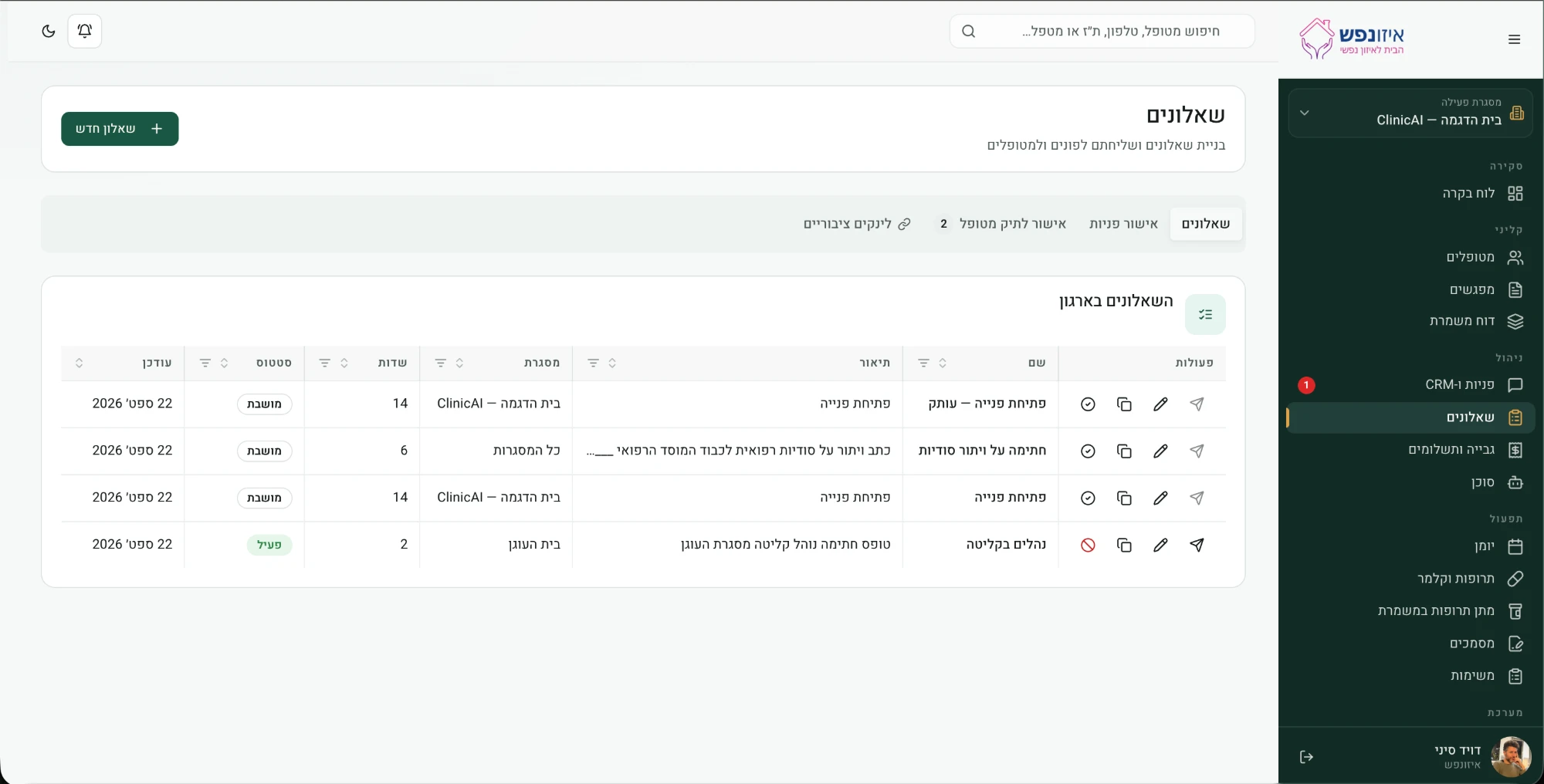
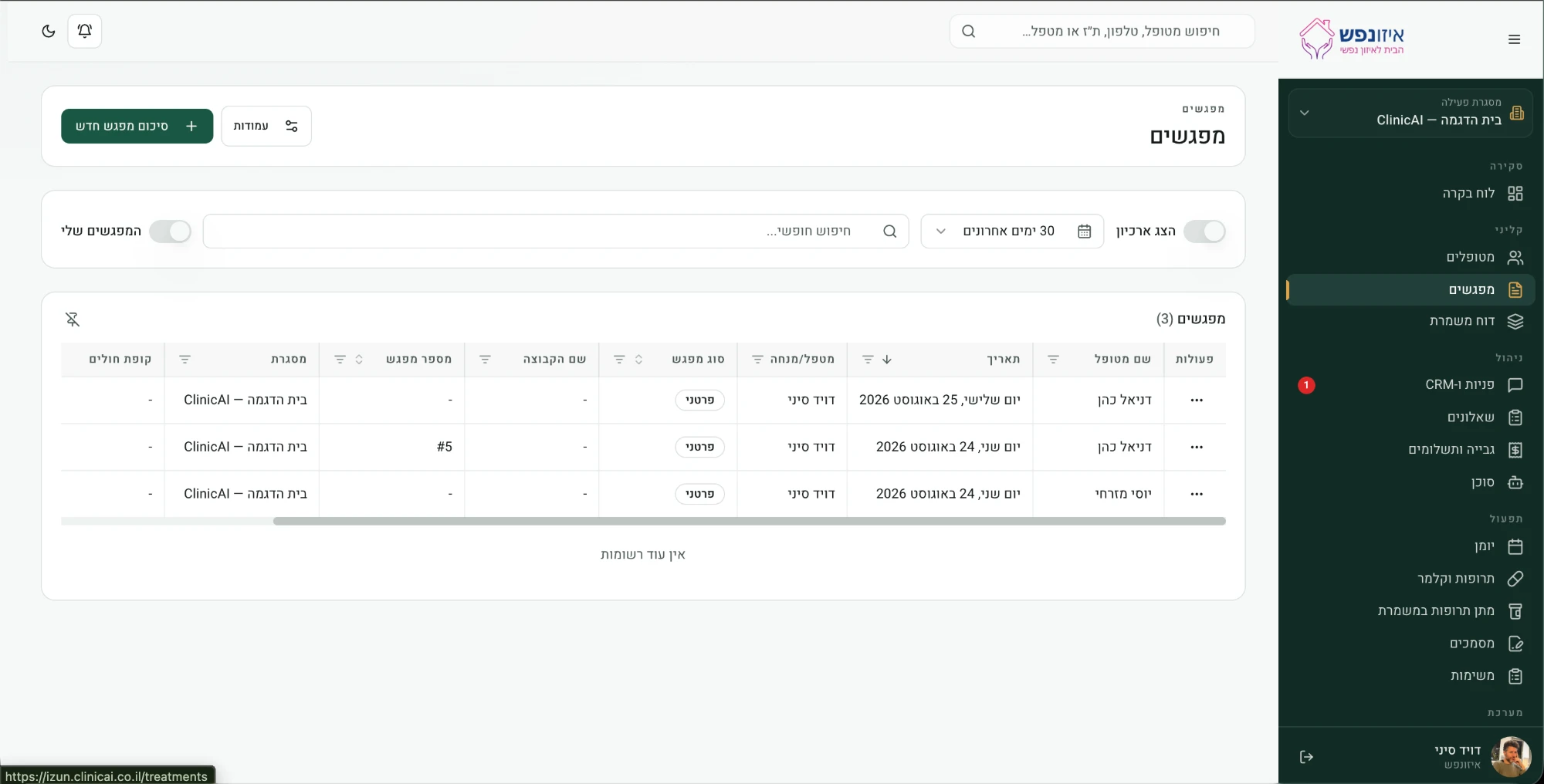
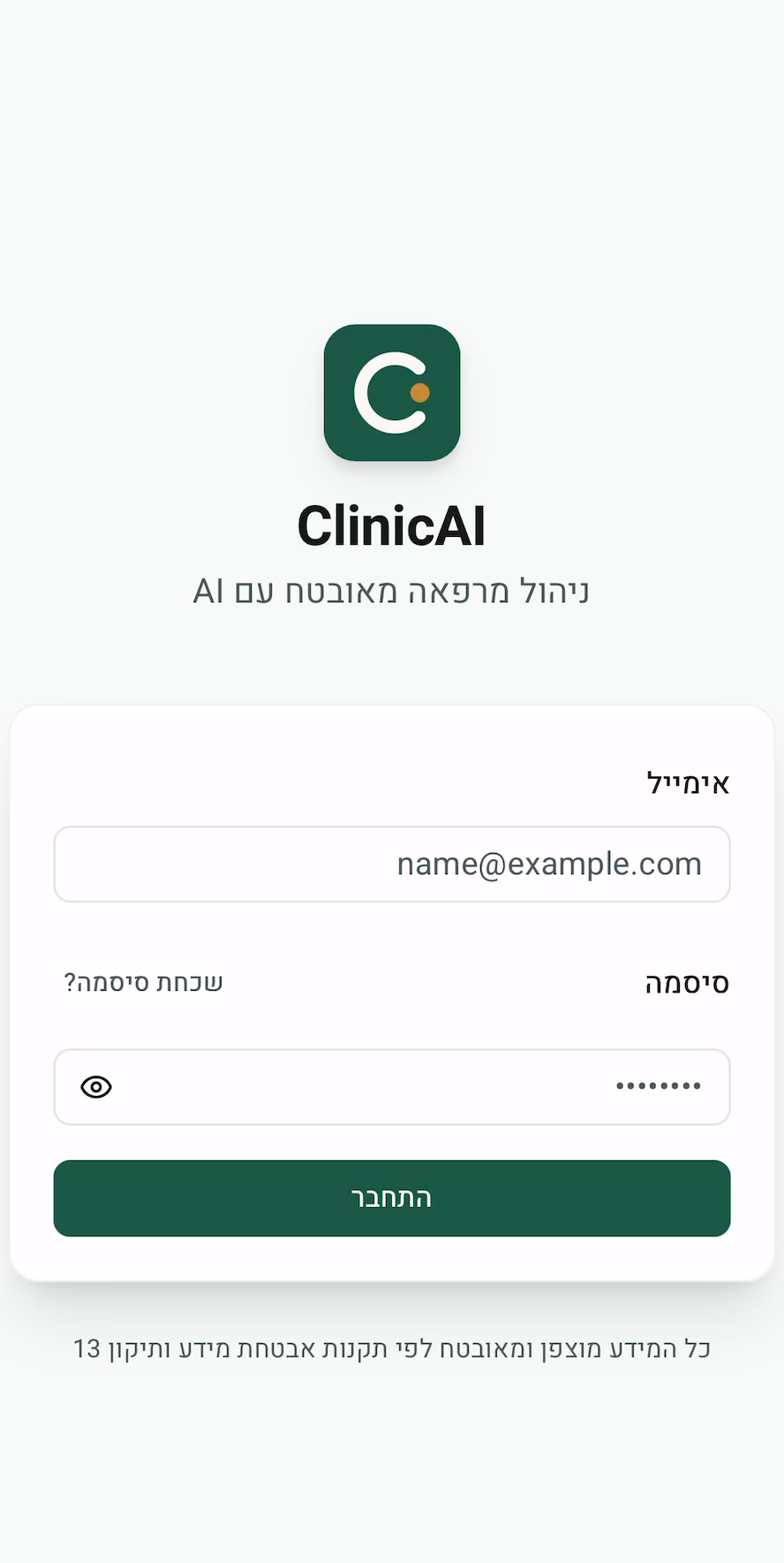
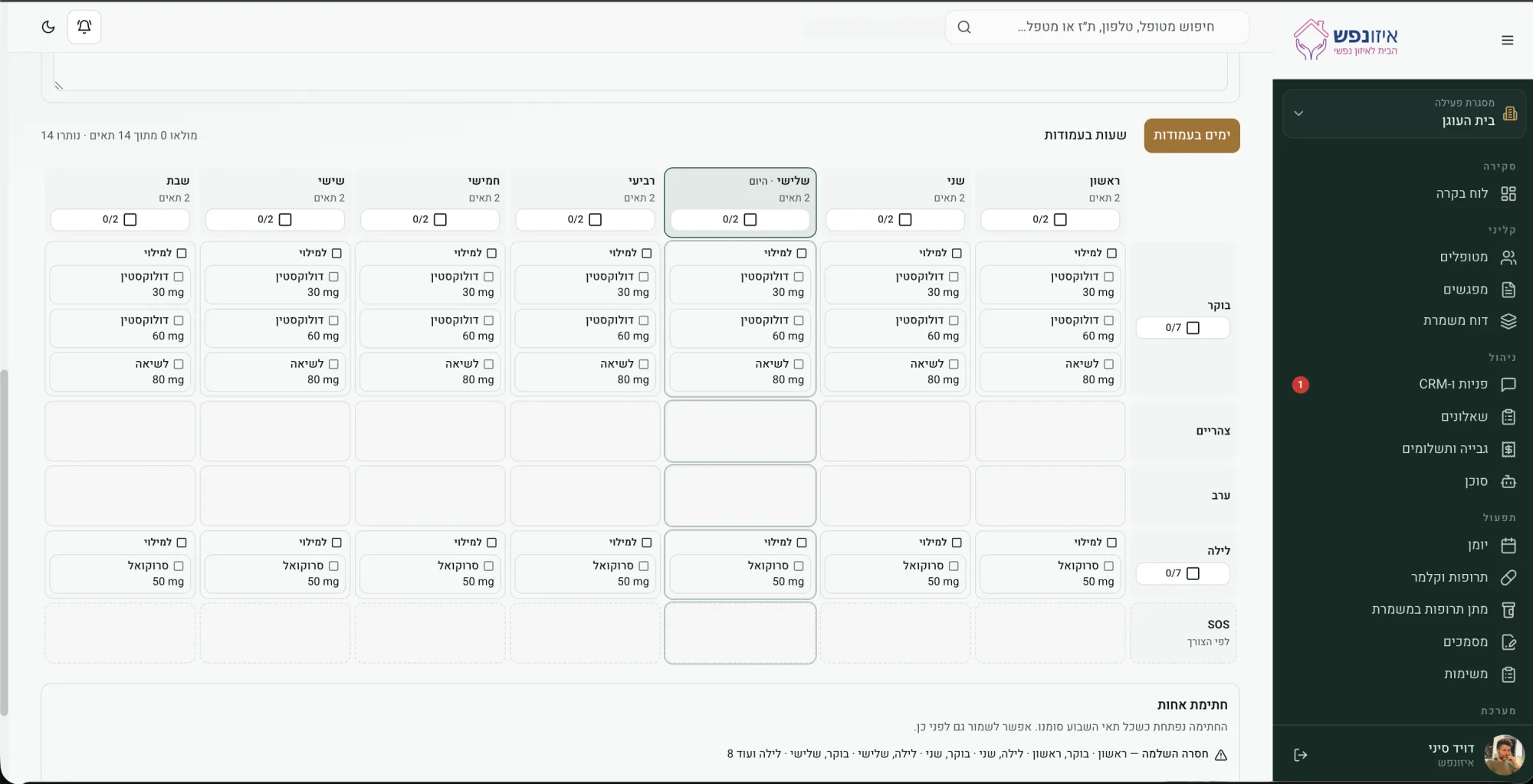
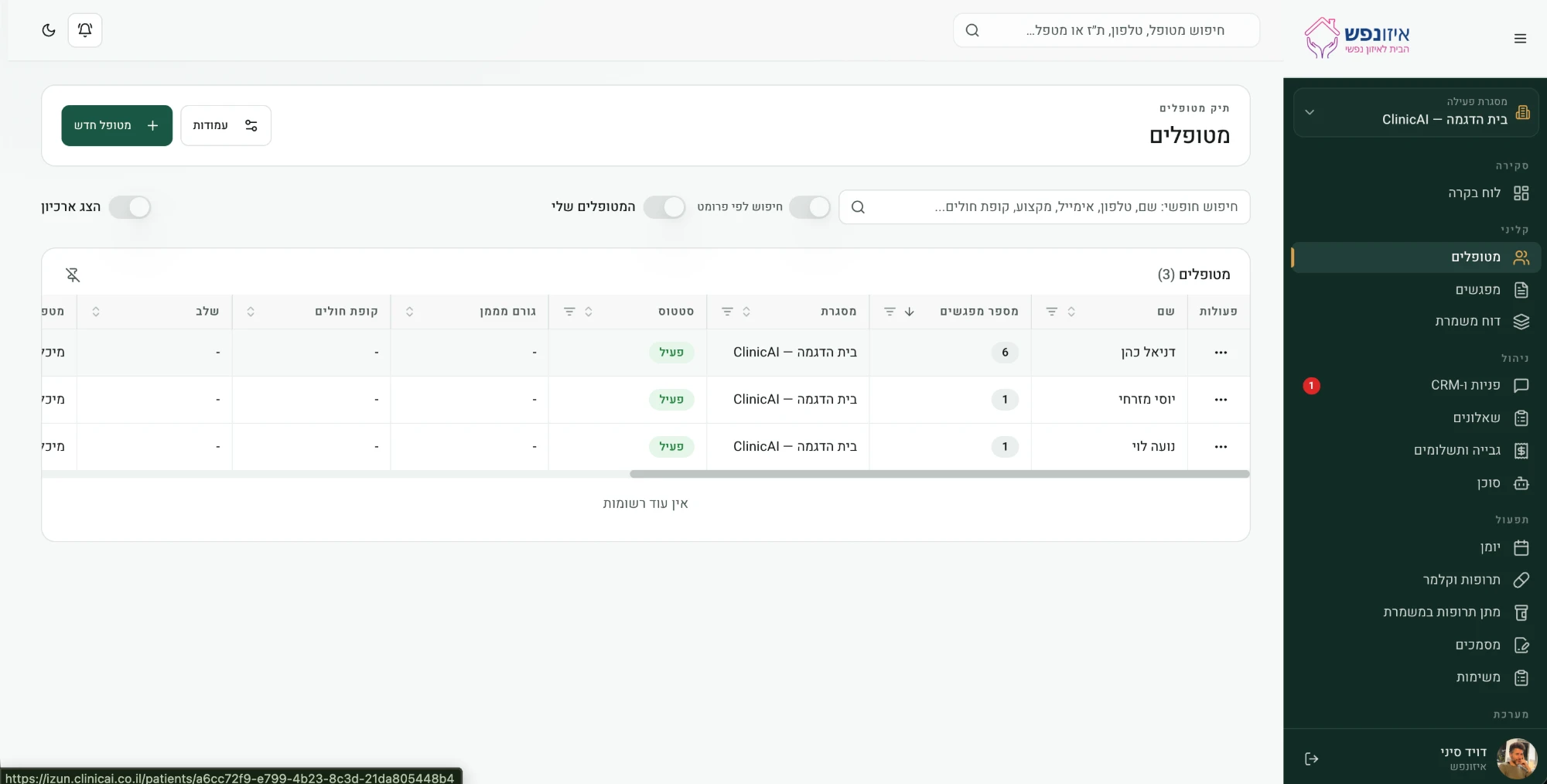
The product interface shown here is in Hebrew.
Each facility has its own forms, its own summary format and its own rules. There is no shared clinical language, and no way to compare facilities.
Session summaries in files on personal computers, shift handovers in WhatsApp groups. Sensitive medical information sitting everywhere except a secure system.
Hours every week go to writing summaries instead of treatment, and staff turnover makes each of those hours more expensive.
How many sessions took place this month? Where is the load? Which patients are at risk? The answers arrive late, if at all.
Prescriptions, dose changes and safety alerts managed in spreadsheets. Every mistake here is an incident.
A database holding mental health information is classified as especially sensitive under Amendment 13 to Israel’s Privacy Protection Law. That responsibility sits with management.
Mental health records are classified as especially sensitive. ClinicAI was built around that from day one.
When a transcript or summary is sent for AI processing, the patient’s identity stays behind. The request carries no name, ID number, file number or internal identifier. The AI receives the clinical text only, alongside a one-way token that cannot be turned back into an identity. The result is linked to the patient only after the response returns, inside the secure system.
On top of that, free text is automatically stripped of phone numbers, email addresses and ID numbers before it leaves. A second layer of protection, even if an identifying detail was typed into a summary by mistake.
Names, phone numbers and ID numbers are stored encrypted in the database. Direct access to the raw data does not expose them.
Separation between facilities is enforced in the data layer itself, not just on screen. A therapist in one facility cannot reach another facility’s records, even if they try.
Therapists, nurses, administration and management see exactly what their role justifies, down to a single form field and session type.
An audit log: who signed in, what was viewed and what was changed. An essential basis for incident investigation and audits.
Recordings and records are deleted automatically under a policy set in advance. Data minimization, enforced in code.
Sign-in with identity verification by text message or email. A stolen password alone is not enough to reach the records.
The platform is built to the principles of ISO 27001 for information security management. We are in the middle of the certification process.
The platform was designed knowing that a mental health database is classified as especially sensitive and requires a high security level under Israel’s data security regulations.
The security architecture, the data flow and the vendors involved are open to review by your information security officer and legal counsel before you sign.
The AI does not replace clinical judgment. It takes the grunt work off therapists and surfaces for management what is hard to see by hand.
The session recording becomes a full Hebrew transcript. The recording is deleted automatically under the policy you set.
The transcript becomes a structured summary based on the session type and the fields you defined, ready for the therapist to edit and approve. The therapist remains clinically responsible.
Attention management: deterioration, setbacks in treatment, recurring patterns, flagged to the person you choose.
Trends at the level of the patient, the therapist, the facility and the whole network. What works, where the load is and where intervention is needed.
A shift brief built from the documentation itself, so the incoming team gets the full picture without reading everything.
Supervision briefs that gather what happened since the last meeting, so supervision time goes to the clinical work.
No two centers work the same way, and even within one network each facility has its own language. ClinicAI was built to adapt, without development work and without waiting for the next version.
Intake, individual session, group, committee, doctor’s visit, family meeting, shift report. You define the session types, the fields in each, the type of each field and who may see it.
The instructions the AI works by are yours. Summary length, structure, terminology, what must be included and what to leave out are set at the network level.
Medication is the hardest area to manage in a spreadsheet.
Choose a drug from the registry of medicines approved in Israel: name, dose and route of administration, with no free typing and no spelling mistakes.
Active prescription, change history, and who changed what and when. The full medication picture lives in the patient’s file.
The platform flags combinations and conditions that warrant a second look before they reach the patient.
Medication is read together with the course of treatment, so the link between a dose change and a change in condition is visible.
Most practice management systems were built for one therapist in one room, and start to break at the second facility. ClinicAI started from the other end.
Switch between a single facility and the whole network in one click. Every screen, table and report updates to match, with no second sign-in and no separate systems.
Therapists, nursing staff, administration, supervisors and management: each role has its own screens and permissions, on one shared database.
The clinical history moves with them. No new file to open and no break in continuity of care.
Load, activity volume, trends and comparison between facilities. Data built from day-to-day work, with no manual reporting.
Appointment management for the whole network, synced with the organization’s calendar and with automatic reminders for patients.
A secure channel for sharing information, forms and consents, instead of documents over WhatsApp.
A quick look at how the whole network looks from the inside.
Short video: how it works (narrated in Hebrew)
The patient’s identity never leaves the system. The AI provider receives the clinical text only, alongside a one-way token that cannot be turned back into an identity. No name, no ID number, no file number and no internal identifier. Free text is also automatically stripped of identifying details before it leaves. We are happy to walk your information security officer and legal counsel through the full architecture.
We import patients, therapists and session history as part of onboarding. The scope and timeline of the import are set once we see how your existing data is structured. That is part of the first conversation.
A therapist’s daily flow is record, approve the summary, save. The complex settings arrive already configured and never appear on the therapist’s screen.
No. The AI transcribes, summarizes and flags what needs attention. Every summary is approved by the therapist, who remains solely clinically responsible. Alerts surface things for human review; they do not decide.
That is exactly the case the platform was built for. Multiple facilities, data separation between them, different roles in each facility and a management layer that sees the whole picture. These are the foundations of the architecture.
Pricing depends on the number of facilities, the number of users and the scope of onboarding. Leave your details and we will get back to you with a tailored quote.
Leave your details and we will build a pilot in one facility together: setup, onboarding and close support, so the decision about the network is based on what you have seen.